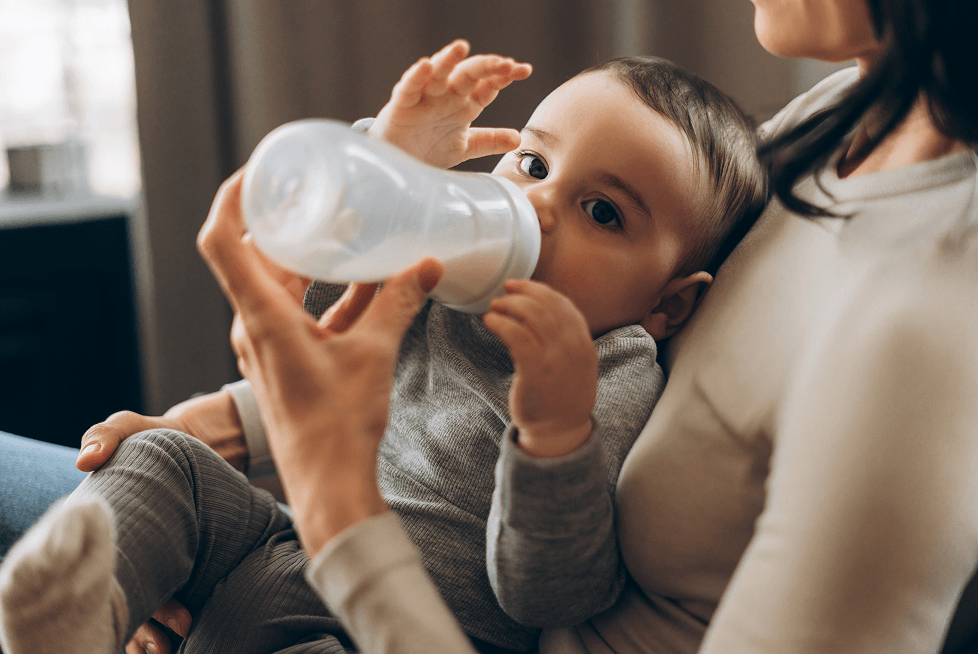
Emergencies like wildfires, floods, or power outages can happen at any time. These situations can make it hard to get clean water or electricity. If your baby is taking formula, extra care is needed during an emergency to keep feeding safe. This information can help you feel prepared to feed your baby safely, even in stressful situations.
Emergencies and disasters can happen suddenly and without warning. They may leave you and your family without electricity, clean drinking water or transportation. These events can be caused by severe weather, disease outbreaks, floods, wildfires or other hazards.
Babies are especially at-risk during emergencies. That’s why it is important to have a plan for how you will feed your baby if you lose power, don’t have clean water or if you need to evacuate your home and go to a reception centre or shelter.
Safe feeding practices are the most important way to protect your baby from getting sick during an emergency. The way you prepare for an emergency will depend on how you normally feed your baby.
Note: the instructions in this article are only for formula feeding your baby in an emergency situation.
If you are not in an emergency situation, please see our article Formula Feeding Your Baby for more information.
If you are breastfeeding/chestfeeding your baby in an emergency, see our article here: Breastfeeding/Chestfeeding Your Baby in an Emergency.
Be Prepared Before an Emergency
- Try to keep at least a three-day supply of ready-to-feed formula at home in case of an emergency.
- If you use powdered or liquid concentrate infant formula:
- Have a three-day supply of the formula your baby uses.
- Keep enough bottled water to make the formula:
- Most babies will need around one litre of water per day to prepare formula.
- Have a 24-bottle flat of bottled water or several 4L (gallon) jugs on hand.
- Make sure you have enough bottles and nipples.
- Keep supplies to wash bottles and nipples, like soap and a clean brush.
Feeding Your Baby
- Hold your baby skin to skin to provide comfort and warmth.
- Wash your hands before making formula and before feeding your baby.
- If you don’t have soap and clean water, use hand sanitizer with at least 60% alcohol.
Storing Formula Safely in an Emergency
- Prepared formula must be kept in the refrigerator at 4°C (40°F) and used within 24 hours.
- If you do not have power, use single serve, ready-to-feed formula.
Take Care of Yourself
A quiet, private place to feed your baby will help with the stress and distraction. Connecting with other parents can provide emotional support making it easier for you to care for your baby and other children during a stressful event.
For more information, check out: Well-being & Mental Health – Parenting in Manitoba
Cleaning Baby Bottles in an Emergency
Follow these steps only in emergencies when you do not have the equipment you normally have and a kitchen to clean feeding equipment and make formula:

- Wash your hands with soap and water.
- Clean bottle and nipple with hot soapy water. If you are re-using the ready-to-feed infant formula bottles it is important to clean them.
- Rinse with warm water.
- Place on a clean surface to dry.
Your bottles are now ready to add formula.
Important: If you are not in an emergency situation, follow standard sterilizing methods: How to Sterilize Your Formula Feeding Equipment
Follow the instructions on the package to make formula.
If you are staying in a shelter or hotel, ask staff if they have equipment (such as a pot, stove or kettle) to sterilize feeding supplies.
Making Formula for Your Baby in an Emergency
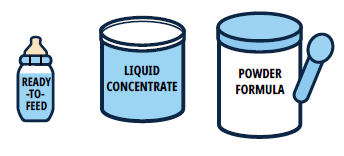
1. Types of formula
If you have ready-to-feed formula, it is the best choice. If you have it, go to step 4. If not, continue to step 2.
2. Water Options in an Emergency
Find out if the tap water is safe to drink in your community. If there is a water advisory, you might be given bottled water. Bottled water is not sterile, so boil it before making formula.
a) If tap water IS safe, or there is a boil water advisory:
- Run the cold water tap for 2 minutes.
- If you have a pot and a portable cooktop, boil the water at a rolling boil for 2 minutes.
- If you have a kettle, boil the water until it shuts off.
b) If tap water is NOT safe, use bottled water:
- If you have a pot and a portable cooktop, boil the bottled water for 2 minutes.
- If you have a kettle, boil the water until it shuts off.
c) If you can’t boil water, use ready-to-feed formula.
3. Making the formula: follow the mixing instructions that come with the formula
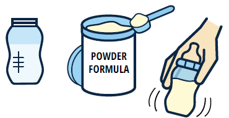
a) Formula powder or single serve: Powder formula is not sterile, it needs to be mixed with water that has been boiled and cooled for 30 minutes, not longer.
- Always add the cooled, boiled water first, then use the scoop that comes in the can to add the powder.
- Shake the bottle well before feeding. If feeding immediately, ensure the temperature is safe for baby.
- If you have a fridge, you can store and use within 24 hours. If you do not have a fridge, feed formula bottle immediately.
b) Liquid concentrate formula:
- Only use this type of formula if you have a fridge.
- Cool the boiled water to room temperature, pour it into a jar and put the lid on. This water can be used immediately or kept at room temperature for 24 hours or in a fridge for 2-3 days.
- Wipe the top of the can and shake it before opening.
- Mix water with formula and prepare bottle. Feed immediately when temperature is safe or put bottles in the fridge.
- Use prepared bottles within 24 hours. Do not leave bottles standing at room temperature.
- Put a tight lid on any unused liquid concentrate and store in the fridge.
- Use the leftover liquid concentrate within 48 hours.
4. Throw away any formula that your baby doesn’t finish.
Resources
If you have questions about feeding your baby, contact:
- Your public health nurse: https://www.gov.mb.ca/health/publichealth/offices.html
- Health Links – Info Santé:
- Winnipeg: 204-788-8209
- Outside Winnipeg: 1-888-315-9257
- Open 24 hours a day, seven days a week
- Dial-a-Dietitian:
- Winnipeg: 204-788-8248
- Outside Winnipeg: 1-877-830-2892
- Monday to Friday, 8 am to 4 pm
References
- Grey Bruce Public Health Unit: Feeding Your Baby in an Emergency
- Nova Scotia Public Health Unit: Infant Feeding Emergency Preparedness for Parents and Caregivers
- Formula Feeding Your Baby in an Emergency