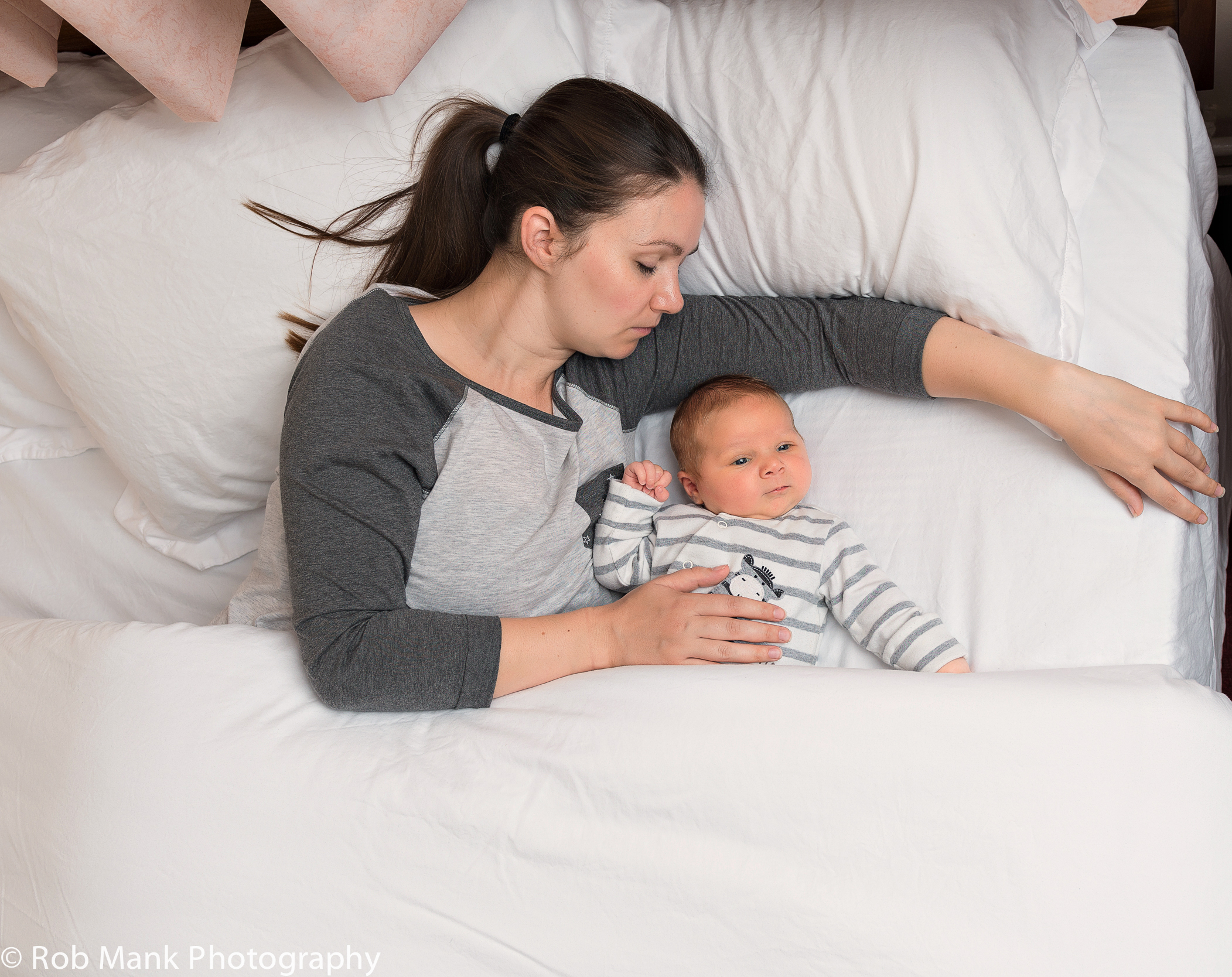
Babies are safest in their own sleep space like a crib, cradle or bassinet.
If you do not have a crib, cradle or bassinet, connect with a public health nurse, nursing station, or health centre who will work with you to find a solution.
Some families choose to have their baby sleep in their bed with them.
Use this checklist to bed-share more safely.
- Baby sleeps on back directly on a firm mattress.
- Never on a co-sleeper, car seat, or infant seat.
- Parent’s long hair is tied up.
- No soft bedding such as comforters and pillows near baby.
- Bedding and sheets can’t cover baby’s face.
- Bed is away from the wall and other furniture so baby can’t get trapped.
- Baby is not swaddled. Use a sleep sack if needed.
- Baby is placed on the side of one parent. Both parents know that the baby is in the bed. Baby is never in the middle of two adults or next to other children or pets.
- Room temperature is cool and comfortable so that baby doesn’t overheat.
- Never leave baby alone in an adult bed.
When not to bed-share:
If you or your partner:
- smokes, if there is any smoking in the home or if you smoked during
pregnancy - are overly tired or are sick
- have been drinking alcohol or using drugs
- have taken any medications that make you feel sleepy
- are obese
If your baby:
- was born at less than 37 weeks
- was small at birth (weighed less than 2.5 kg or 5.5 lbs.)
- is under 4 months of age, when the risk of suffocation and sudden unexpected infant death is highest.
For more information on safe sleep for your baby see our article on Safe Sleep and Your Baby.