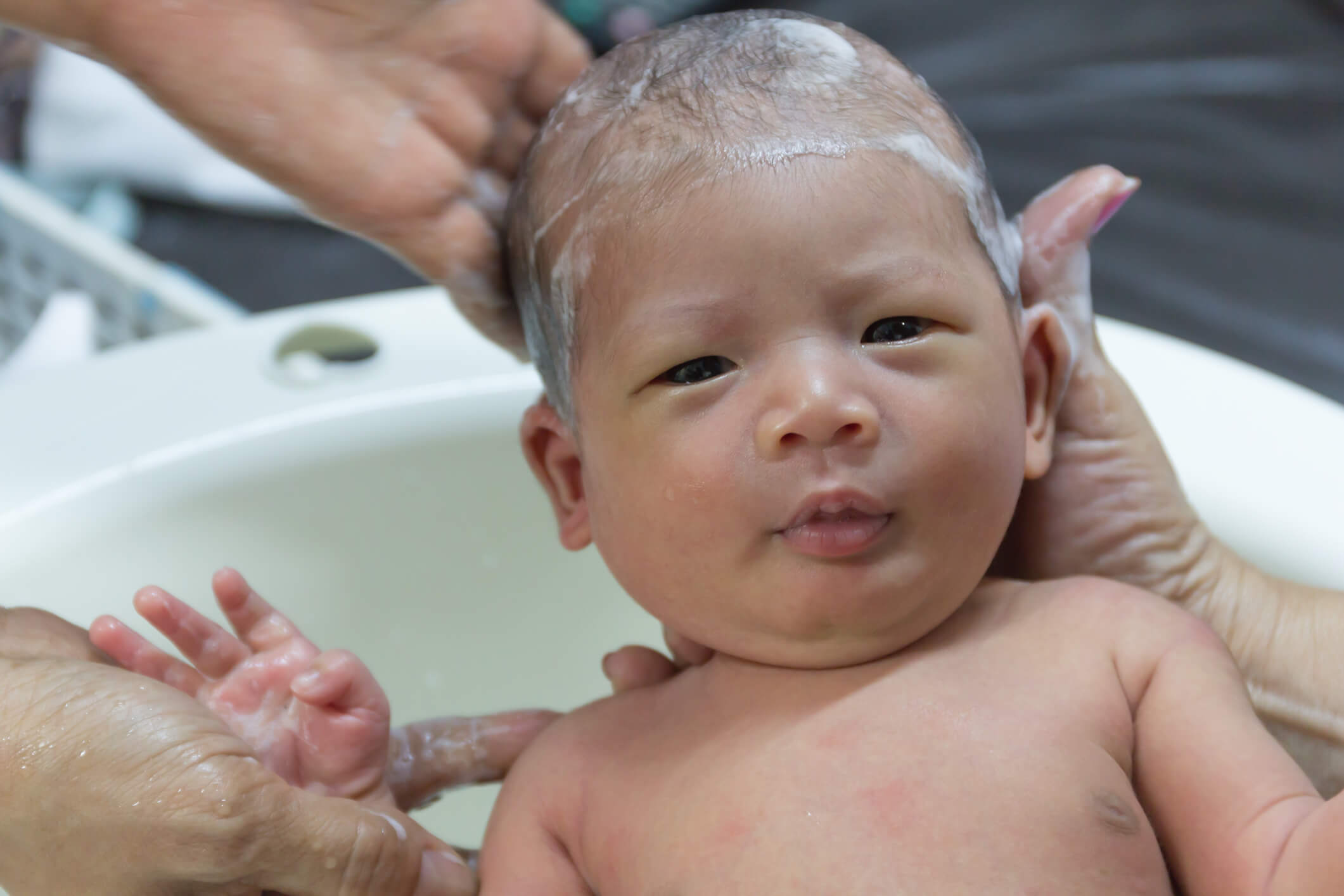
Some babies love being in the water and find it very relaxing, while some take a while to warm up to the idea. It is up to you how often you give your baby a bath. As long as you wash all your baby’s folds and creases daily and their diaper area during changes, your baby doesn’t need to have a bath everyday.
Did you know?
You do not have to wait until your baby’s umbilical cord has fallen off to give them a bath. Just be sure to pat it dry.
What you need for bath time
Whether you are bathing your baby in a basin/baby tub or an adult tub, gather the things below and have them within your reach:
- a few clean washcloths
- a towel
- mild baby soap
- a clean diaper and clothes to dress your baby in after the bath
Bathing your baby in a basin or tub
Infant tubs, shallow basins or plastic tubs are convenient for bathing your baby. Once you have everything in reach:
- Line the basin or sink with a clean towel.
- Before putting baby in, fill the tub with about five centimetres (two inches) of water.
- Run cold water into the tub first and then add warm (not hot) water until it is a comfortable temperature. Mix the water with your hand to get rid of hot spots.
- Check the temperature with your elbow before you put your child in the tub. If the water feels hot to you, it is too hot for your baby. Cool it by adding cold water.
- Babies are slippery when wet — be sure to keep one hand on your baby at all times and support your baby’s head and neck.
Bathing with your baby
- Use non-slip strips on the bottom of the tub and a cushion over the water faucet to help prevent your child from being injured.
- The tub and your baby are both slippery. You should get in the tub first and have someone hand you the baby.
- When bath time is over, it is best to hand your baby to someone else before you get out of the tub. If you are alone, have a clean towel on the floor beside the tub and place baby there before you get out.
Now to wash your baby…
- Use mild soap or baby shampoo.
- You can hold your baby wrapped in a towel over the wash basin and wash their face and hair.
- Then unwrap your baby and place them in the wash basin with your arm underneath for support.
- Work from “head to toe” or “top to tail.” Use plain water only to wash baby’s face. Then wash the rest of their body and finally the diaper area with a mild soap.
- Be sure to clean the baby’s creases under the arms, behind the ears, around the neck and the genital area.
- Avoid bubble bath products as they can irritate your baby’s skin.
- When finished, dry your baby using a clean towel on a flat surface.
After the bath
- Wrap your baby in a towel to keep them warm and dry after the bath.
- Pat your baby dry and be sure to dry skin folds and the umbilical cord if it hasn’t fallen off yet.
- Drain the tub immediately after use.
Check out this video from Parenting in Ottawa – Here Comes Baby – Bathing Your Baby
Note: Other videos may be recommended by the host channel (e.g. YouTube, Vimeo). These suggestions may be based your personal search history and other factors. The Manitoba Government does not control these suggestions and is not responsible for and may not endorse the content.
Safety tips
To prevent drowning:
- Babies can drown in as little as 2.5 centimetres (one inch) of water in just a few seconds.
- Supervise at all times: Never leave your child in the bathtub alone or with an older sibling. Take your child with you if you need to answer the door or phone.
- Never use bath seats and bath rings as they give a false sense of security. Babies can slip under the bath ring or the bath ring can tip over.
Prevent hot tap water scalds
Scalds are painful burns that can be caused by hot liquids or steam. Every year young children get painful scalds from tap water.
Keeping your tap water at 49C (120F) will help keep your child safe. For information on how to test and adjust your water temperature, see Hot tap water FAQ – Parachute Canada.
Prevent falls
Babies can roll off change tables and counters and get injured.
Always keep one hand on your baby if you are laying them on a counter, change table or another raised surface.