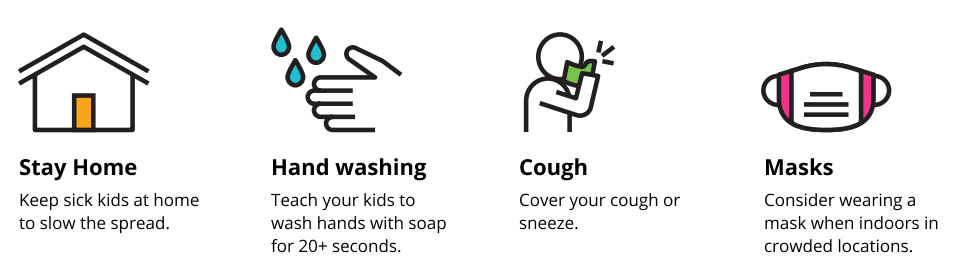
Having a sick child can be scary. Know what symptoms to watch for, how to provide care and comfort at home, and when to seek help — it’s all part of providing good Kid Care! At an emergency department, the sickest patients are always seen first. Less sick patients will have to wait for care.
Depending on your child’s symptoms, you may be able to provide care at home, or be seen faster by your doctor, at a walk-in clinic or urgent care, nursing station or health centre. When deciding where to go, consider these cold and flu symptoms to determine whether your child needs emergency care.
Emergency
Not an Emergency
Breathing Problems
in respiratory distress, having difficulty breathing, breathing faster than usual
pale skin with blue lips
wheezing, not responding to medication
nasal congestion and cough
mild wheezing that is responding to medication and there is no difficulty breathing
Fever
in a child less than three months old
immune system or chronic health problems
difficult to wake or excessively sleepy
fever ongoing for more than five to seven days
neck stiffness with vomiting and sleepiness
unable to walk or weakness of arms or legs
fever with a new rash
in healthy and vaccinated babies older than three months
in children who are generally well
on its own a high fever does not require a trip to emergency
Vomiting or Diarrhea
in a child less than three months old
repeated vomiting and unable to keep down any fluids
signs of dehydration (no tears, has a dry mouth or sunken soft spot) or if no urine is passed for 12 hours
vomiting with blood
vomiting or diarrhea less than three or four times per day
ongoing diarrhea after the “stomach flu” as this can last for up to two weeks
see a doctor if there is bloody diarrhea or recent travel out of the country
Not sure where to go?
In an emergency, call 9-1-1 or your local emergency number.
All children in Manitoba aged six months and older can get COVID and flu vaccines. Keeping your kids up to date on vaccinations can prevent them from getting sick. There are many locations across the province where they can be immunized, and we have an online map to help you find a spot that is convenient.
Fever is not dangerous. It is the body’s natural response to infections and actually helps to fight infection. Higher temperatures do not mean the infection is more serious and a fever on its own does not require medical attention in most children.
You do not need to treat fever with medicine. Cool your child by dressing them in light clothing, offering extra fluids and keeping the room cool.
Pertussis is an illness caused by a type of bacteria (germs) known as Bordetella pertussis that gets into your child’s nose, throat and lungs. Pertussis is very serious because:
It causes long, intense coughing spells that makes it hard for infants and children to eat, drink or even breathe.
It can lead to pneumonia, brain damage, seizures and death, especially in infants.
About one in 400 infants with pertussis dies because of pneumonia or brain damage.
A child can be sick with pertussis for two to three months .
What are the symptoms of pertussis?
Symptoms generally appear nine to 10 days after infection and can vary based on age.
Pertussis usually starts like a cold with a runny nose, red watery eyes, mild fever and cough.
After a few days, the cough may worsen with coughing spells that are followed by a “whoop” sound before the next breath. The cough is usually severe for two to three weeks before it starts getting better.
Your child may cough so much that they:
throw up
have trouble breathing
become exhausted
Check out this video from the Mayo Clinic to hear what a whooping cough sounds like.
Note: Other videos may be recommended by the host channel (e.g. YouTube, Vimeo). These suggestions may be based on your personal search history and other factors. The Manitoba Government does not control these suggestions and is not responsible for and may not endorse the content.
How do you get pertussis?
Pertussis is very contagious. It is easily spread from one person to another though the air when a person with pertussis sneezes or coughs. This can happen when spending time with someone with pertussis
How can I protect my child?
The best way to protect you or your child is to be immunized with a pertussis containing vaccine.
Babies under two months of age are too young for their first immunization but can be protected if everyone around them is up to date with their immunizations.
Pregnant people should be immunized with Tdap vaccine in every pregnancy. This helps protect your newborn baby for the first few months of life.
Adults who are due for a tetanus booster and have never had a pertussis-containing vaccine in adulthood should get the Tdap vaccine.
Did you know?
If your child is exposed to pertussis and is not vaccinated or up to date, you should get them vaccinated right away. If your child gets pertussis the vaccine, it may reduce the severity.
What should I do if I think my child has pertussis?
If you suspect your child has pertussis, take them to:
To diagnose pertussis, your health-care provider will take a swab from your child’s nose and test it.
A health-care provider will contact you if you or your child tests positive for pertussis and will provide further information on prevention of exposure to others.
How is pertussis treated?
Treatment with appropriate antibiotics can help to shorten the length of symptoms and prevent the spread to others.
If antibiotics are prescribed, your child should take all the medication, even if they seem better.
Do I need to keep my child home?
If your child has pertussis, your child is contagious. They need to have antibiotics for five days before they can attend daycare or school.
After being treated for five days with appropriate antibiotics, only send them if they are feeling well enough to attend.
Avoid contact with infants under one year of age, pregnant women and those who are unvaccinated until considered no longer infectious.
A public health nurse will contact you if you or your child tests positive for pertussis and will provide further information on prevention of exposure to others.
Tips for comforting your child:
Keep your child hydrated by offering plenty of fluids or breastfeeding/chestfeeding on cue.
Let your child rest .
If your child is over one year old and does not have an allergy, offer them honey.
If your child has a fever, dress your child in light clothing and remove any extra blankets.
Acetaminophen (Tylenol®, Tempra®) or ibuprofen (Advil®, Motrin®) are the medicines that can be used to reduce your child’s aches and pains from the fever and illness.
How much you give is based on your child’s age and weight.
Follow the medicine’s directions for how much and how often you can give the medicine to your child.
Do not give any medication if your child is allergic to it.
Safety Tips
To avoid giving your child too much medication:
Use only the measuring syringe or cup that comes with the medicine. Kitchen spoons are not all the same and can cause overdosing.
Make a note of the time and amount you gave. Tip: your calendar or phone works great for this.
Write clear instructions for other caregivers about your child’s medicine – what medicine, how much and when.
Wash your hands and your child’s hands with soap and water after coughing, sneezing or wiping a runny nose. To learn more see Hand Hygiene – Government of Manitoba
Tip: Sing your child’s favourite song with them while washing hands to make sure they are washing long enough.
Sometimes a parent may make far more milk than their baby needs. Extra pumping, taking herbal supplements or prescription medication (e.g., domperidone) that increase milk supply can lead to oversupply. Parents with too much milk may have frequently engorged breasts/chest which could lead to mastitis or plugged ducts. So how do you know if you have too much milk? And what can you do about it?
You may notice:
Your breast/chest size growing more than two cup sizes.
A strong or painful “letdown” of milk once or many times when baby is feeding.
Milk sprays from the nipple if baby unlatches.
It is very easy to express your breastmilk/chestmilk.
The other breast/side of the chest leaks when you are feeding on the opposite breast/side.
Your breasts/chest feel very full or hard most of the time.
Gulp quickly, cough, choke or sputter while feeding at your breast/chest.
Bite the nipple to try and slow down the milk. They may come off the breast/chest often or not able to stay latched.
Stiffen their body, arch their back or scream.
Spit-up and be gassy.
Have green or watery poop and lots of heavy, wet diapers.
Gain too much weight quickly.
Did you know?
If you are unsure if you have too much milk, you can check in with your health-care provider or public health nurse.
“I have so much milk and yet my baby still seems hungry”
If you have too much milk, you may be surprised that your baby:
is hard to settle
seems unsatisfied
wants to feed often
This is because your baby is filling up on the foremilk that contains more milk sugar (lactose), which doesn’t keep them feeling full. This also causes a gassy baby and green poops. For more information on foremilk and hindmilk, see Le Leche League’s information on oversupply.
What can help?
Adjust your breastfeeding/chestfeeding position to one that allows baby’s head to be level with or above the breast/chest. This way:
Gravity won’t have as much effect on your milk flow.
Choking is reduced, since milk is directed away from the back of baby’s throat.
Laid-back Nursing
Do the cradle, cross cradle or football hold and then lay back.
Get comfortable with your back supported either in bed, on a couch or in a recliner.
Latch baby using whatever hold you choose (cradle, cross-cradle or football), then lay back so that baby’s head is either at the same level as the breast/chest or above it. You can use pillows to support baby as well.
Side-lying
Lay down on your side. Use cushions or pillows to support your back, shoulders and neck. Be sure none of these supports are covering or near your baby’s face or head.
Place baby on their side facing you with their ear, shoulder and hip in a straight line. Pull your baby in close, tummy to tummy. Your baby’s nose should be lined up with your nipple.
Place a rolled-up towel or baby blanket behind your baby for support. Remember to remove it after you finish feeding.
Latch baby to your breast/chest.
Baby sitting upright in front
Find a comfortable position. You may want to support your back and use a footstool for your feet.
Position baby so they are sitting upright, straddling one of your legs as close to your body as possible. You may need to use a pillow under baby to get them to the level of your nipple. Latch baby to your breast/chest. You may choose to lay back or stay sitting upright.
Safety Tip
When using pillows or rolled up towels or blankets to position yourself or your baby, make sure that none of these supports are covering or near your baby’s face or head. When your baby is finished feeding, place them in a crib, cradle or bassinet for sleep.
How to reduce oversupply if you have too much milk
Feed your baby based on their hunger cues: Feed your baby as soon as they show signs of hunger (licking their lips, opening and closing the mouth or sucking on their hands/fingers). This is when babies are more likely to suck gently. If you wait until your baby is very hungry, crying and frantic (late hunger cue), they are more likely to suck harder.
Avoid any extra pumping. If you are separated from your baby or are exclusively pumping, aim to produce only the amount of milk your baby needs and not more.
Express only a little milk to get relief if your breasts/chest are full.
Talk to a health-care provider to discontinue any medications or overthe counter supplements that you are taking to increase milk supply.
Feed with one breast/side of the chest each time. Offer only one breast/side of the chest until baby is satisfied. Switch to the other side on the next feed.
Block feeding is meant to be a short-term strategy. How to do it:
Use only one breast/side of the chest to feed baby for a block of three hours. If the other breast/side feels uncomfortable during this block of time, express only enough milk to relieve the pressure.
After this three-hour time has passed, switch to the other breast/side of the chest for the next three hours.
Because this reduces your milk supply, you don’t want to continue this for too long. If you have questions or need support, speak with your health-care provider or public health nurse.
If you have a strong letdown:
Express before feeding
Express some milk for one to two minutes before putting baby to your breast/chest. This can help release the first big rush of milk and help slow the flow to an amount that baby can handle.
Un-latch baby when coughing, choking begins
Allow this rush of milk to spray onto a towel or into a sterile container. Re-latch baby once the flow of milk has slowed down. Repeat if it happens again.
Use the scissor-hold on your breast
Use the first and second fingers of your free hand to push the area just above and below the edge of the areola (the darker area around the nipple). Your fingers will look like a pair of scissors. The pressure should slow down the flow of milk. Change the position of your fingers around the areola to avoid blocking the milk duct. You can stop doing this when the flow of milk slows down.
Babies often swallow air while feeding, which can make them uncomfortable. This happens with breastfed/chestfed and bottle-fed babies. Burping helps get rid of air that the baby has swallowed. Burp your baby:
Part-way through the feed and then again after feeding.
When they seem uncomfortable.
When breastfeeding/chestfeeding when/if you switch sides during feeding.
More often if the baby has problems with gas or spitting up.
Signs that your baby may need to burp:
arches the back
gets fussy or cranky
pulls away from the bottle
slows or stops sucking
Did you know?
Crying babies swallow a lot of air which can cause discomfort and spitting up. Watch your baby for hunger cues and feed before they are hungry to prevent crying.
To Burp a Baby
Place the baby in an upright position. See the pictures below for good burping positions.
Gently rub or pat baby’s back with a cupped hand. The baby will not always burp each time you do this. Wait a few minutes and try again.
Sometimes formula or breastmilk/chest milk comes up with the air when the baby burps. A clean face cloth, cloth diaper or bib can help keep you and the baby clean during burping.
To help the baby swallow less air during bottle feedings:
Feeding your baby early and often at the breast/chest is helpful to establish your milk supply and breastfeeding/chestfeeding relationship with your baby. Expressing your milk stimulates your body to make more milk. There may be times when you want to give your baby expressed breastmilk/chest milk.
Do I need to pump to breastfeed/chestfeed?
If your baby is growing well and you do not have to be away from them, don’t feel like you have to pump. If you are pumping because you are worried about your breastmilk/chestmilk supply, check out our breastfeeding/chestfeeding resources and reach out for help.
What do I need to know about exclusive pumping?
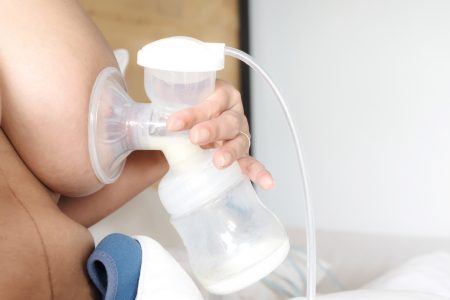
Exclusive pumping is another way to provide breastmilk/chestmilk to your baby. If you decide to exclusively pump, express milk at a frequency that mimics how often your baby feeds. Initially, this could mean pumping every one to three hours for a newborn. As your baby gets older, they would go longer intervals without feeding. Use the most comfortable pressure setting and pump for 10 to 15 minutes. It would also be important to check if the flange size of your breast pump is a good fit for you.
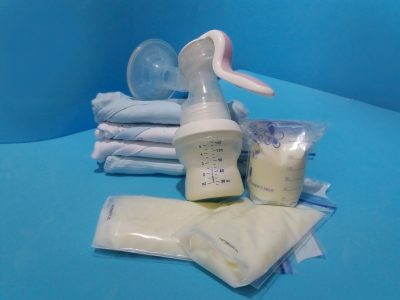
You can rent or buy different types of breast pumps/chest pumps. Ask your midwife, public health nurse, lactation consultant or pharmacy for more information.
When you are choosing your breast/chest pump, try and find one that meets your needs and you feel comfortable using.
Did you know?
If you have health care benefits, you may have coverage for a breast/chest pump. It may be listed under special medical devices and you might need a doctor’s prescription.
Types of Breast Pumps/Chest Pumps
Manual (hand-held) breast pumps/chest pumps
Single electric breast/chest pump
Double electric breast pump/chest pump
How should I store my expressed breast milk?
How should I store my expressed breastmilk/chestmilk?
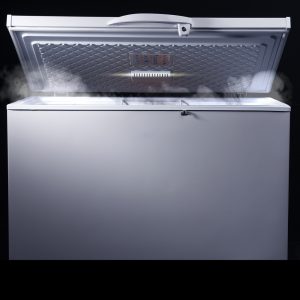
Freshly expressed breastmilk/chestmilk is safe to use at room temperature for up to four hours.
Breastmilk/chestmilk must be stored in a sterilized bag or container.
You can buy sterile milk storage bags designed for freezing and storing breastmilk/chestmilk.
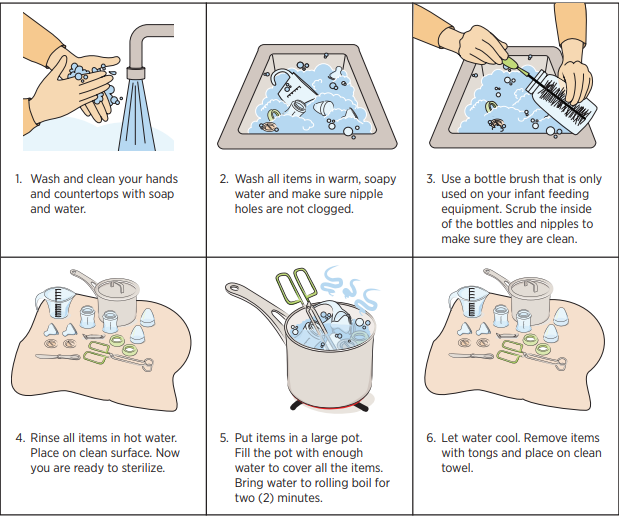
If you are using a container, you must sterilize it. See below for information on how to sterilize.
In a refrigerator for 3-5 days. In a fridge freezer for 3-6 months.
Store your milk in a deep freezer for six to 12 months
Did you know?
You can freeze your milk in two-to-four-ounce (60-120ml) quantities so you can thaw and warm it quickly. You can label the stored milk with the day, month and year.
How to Clean and Sterilize Your Equipment
How do I use frozen breastmilk/chestmilk?
Place frozen milk under cold running water until thawed or thaw frozen milk in the fridge for several hours before it is needed.
To warm breastmilk/chestmilk, place container in a bowl of warm water. Never heat breastmilk/chestmilk in the microwave because it can cause hot spots that can burn the baby’s mouth and affect the quality of the milk.
Thawed breastmilk/chestmilk should be refrigerated and used within 24 hours. Do not refreeze.
Frozen milk can separate when thawed, so shake the container gently.
Safety Tips
When purchasing bottles look for ones that are BPA free.
It is recommended to sterilize all your equipment for the entire time your child is bottle feeding.
You may have some questions about breastfeeding/chestfeeding. Find the answers to some frequently asked questions below.
What is triple feeding?
Triple feeding is when you do three things to feed your baby – feed at the breast/chest, express milk by pumping and feed the expressed milk or formula to your baby. It is meant to be a temporary measure to increase breastmilk/chest milk supply and help babies gain weight. If you are looking for more information read our breastfeeding/chestfeeding resources.
Why is paced feeding important?
Paced feeding is a method of bottle feeding that mimics feeding at the breast/chest. Holding the baby upright and the bottle parallel to the ground ensures a slower milk flow out of the bottle. If the baby pauses to breath or because they are full, you can tilt the bottle down.
Paced feeding:
protects direct breastfeeding/chestfeeding
prevents using up more breastmilk/chest milk stash or formula than needed
prevents overfeeding the baby.
Watch this video to learn how to feed your baby with a paced bottle.
Do I need a special bra?
On average, you can expect to go up one cup size, and one band size, by the time you are breastfeeding/chestfeeding.
Not everyone finds that a maternity or nursing bra is necessary. Some breastfeeding/chestfeeding parents just use an inexpensive and comfortable sports bra.
Nursing bras have clasps or panels that allow easy access to your breasts/chest for breastfeeding/chestfeeding.
For comfort, choose a bra with wide straps, extra hooks and eyes on the band and comfortable breathable material (such as cotton).
Wear a comfortable and supportive bra that is not too tight. Avoid underwire bras as they can block your milk ducts.
If you were binding prior to pregnancy, you may already have stopped due to increasing chest sensitivity while pregnant. While you are breastfeeding/chestfeeding, wearing something less restrictive with more flexibility than a chest binder can be helpful in milk production and lower the risk for mastitis.
Did you know?
You may leak breastmilk/chest milk in between feedings. Breast/chest pads can help absorb the milk. You can find breast/chest pads in the baby section at most stores.
Be sure to change wet breast/chest pads often so they don’t grow bacteria which can lead to thrush. See below for more information on thrush.
Are sore nipples common?
It’s common to feel some pain when your baby latches on for the first few days. This happens because your baby stretches your nipple deep into their mouth while breast/chest feeding and your body is not used to this sensation. The pain happens when the baby first latches on and should go away within a minute with a good latch.
You should no longer feel this pain with latching by four to seven days.
What you can do:
You can get some relief by rubbing colostrum or breastmilk/chest milk on your nipples and letting it dry.
If your nipples continue to be sore, try changing how you hold your baby while breastfeeding/chestfeeding, and get help with the latch.
Pure lanolin products can also help heal nipple pain.
Did you know?
If your nipple pain continues throughout the entire feed- you should get help with your latch. Contact your Public Health Nurse, Health Care Provider, nursing station or health centre. Check out our breastfeeding/chestfeeding resources.
Should I take medications to help increase breast milk?
Get breastfeeding/chestfeeding support if you are having trouble breastfeeding/chestfeeding. Personal help can make all the difference. For a list of places that can help, see Breastfeeding/chestfeeding resources.
Domperidone is a prescribed medication that can increase breastmilk/chest milk supply. It is generally safe and can be effective in increasing breastmilk/chest milk supply, along with adequate breastfeeding/chestfeeding or expressing breastmilk/chest milk. Speak to your health care provider to see if this medicine is right for you.
Domperidone can react with other medications so be sure to tell your health care provider that you are using it if you are being prescribed other medications.
This drug can have some side effects so take only as prescribed. Be sure to taper slowly if you want to stop taking the medication.
Why do my breasts feel like they are going to explode?
In the early days of breastfeeding/chestfeeding it is common for your breasts/chest to swell up with milk. This is called engorgement. Your breasts/chest may feel full, heavy and at times be painful.
Engorgement can also happen after you have been breastfeeding/chestfeeding for many weeks if feedings are missed. To avoid this:
Breastfeed/chestfeed on demand (on baby’s cue) day and night
Express your milk if you miss a feeding
If you are starting to wean- do this slowly
Tips for easing engorgement:
Soften your breast/chest by expressing milk for a few minutes, either by hand or with a breast/chest pump (this will make latching easier).
Make sure your baby is latched on well, and feeds long enough until your breasts/chest feel soft.
Gently massage your breasts/chest (also called breast/chest compressions) while breastfeeding/chestfeeding. This will keep your milk flowing. Watch this video to learn more.
Between feedings, apply cold (cold towels, a diaper soaked in cool water, cabbage leaves) to your breasts/chest for 15-20 minutes. This will help to lessen swelling and pain.
If engorgement is not lessened with the above methods:
Express your breastmilk until you feel comfortable. (by hand, or with a pump)
Use cold compresses to lessen swelling and pain.
If necessary, take medications as advised by your health care provider.
Did you know?
The good news is engorgement generally only lasts a couple of days.
Feed your baby at least 8-12 times in 24 hours, and at least every 3 hours during the day. Continue night feedings.
As you and your baby learn to breast/chest feed your body will adapt to meet your baby’s needs.
Feeding your baby early and often helps to prevent and relieve this discomfort. Feed your baby whenever they show early feeding cues.
Mastitis (breast/chest inflammation):
Mastitis is painful inflammation in the breast tissue/chest tissue which can affect parents who breastfeed/chestfeed or exclusively pump. Mastitis can cause pain, swelling, warmth and redness on your breast/chest and can make you feel run down and tired. Some parents may consider weaning their baby sooner then they intended. The good news is you do not need to wean. You can continue to breastfeed/chest feed while your mastitis is healing. For more information on mastitis click here.
What is a nipple bleb or milk blister?
A nipple bleb forms because of inflammation of the tissue in the nipple.
It usually shows up as a painful white or yellowish dot on the nipple or areola.
If you squeeze your breast/chest, the bleb or blister will typically bulge outward.
What to do if you have a nipple bleb or milk blister:
Do not pick the nipple bleb or milk blister.
Continue breastfeeding/chestfeeding.
Talk to your health care provider to discuss if you need a prescription for a steroid cream to help with healing.
Plugged Ducts
A tender lump that does not go away with breastfeeding/chestfeeding may be a plugged duct.
What you can do to prevent:
Breastfeed/chestfeed your baby on demand on both of your breasts
When unable to breastfeed/chestfeed, express breastmilk/chest milk at the same frequency you would breastfeed/chestfeed (with a breast pump/chest pump or by hand)
Avoid pressure on the area (wear a comfortable bra, avoid sleeping on the side where you feel pain)
How to treat a plugged duct:
Apply cold to your breasts/chest for a couple minutes (a cold towel, a clean disposable diaper filled with cold water, a shower)
Breastfeed/chestfeed your baby on demand on both of your breasts
When unable to breastfeed/chestfeed, express breastmilk/chest milk at the same frequency you would breastfeed/chestfeed (with a breast/chest pump or by hand)
Gently massage the area with your fingertips while you breastfeed/chestfeed
Contact your health care provider as necessary.
Oral Thrush (Yeast Infections)
Cracked nipples or mastitis can lead to a yeast infection on your nipples.
You may have thrush if you have:
a shooting, burning pain in the nipple, areola (dark part around your nipple) and breast/chest
pain that happens while feeding, even with a good latch, and continues after you breastfeed/chestfeed
pinker than usual nipples
nipples that are very sensitive to touch
nipple cracks that are not healing
Thrush can spread back and forth between you and your baby.
Your baby may have thrush if:
they have small white patchy spots on their tongue, gums and/or roof of mouth that look like milk but do not rub off
they are fussy while breastfeeding/chestfeeding
they come on and off your breast/chest while feeding
they are gassy and cranky and may have slow gain weight
If you or your baby have any of these signs and symptoms, see your health care provider as soon as possible. You will both need to be treated for yeast infections at the same time. Antifungal creams are used to help clear up thrush.
To prevent reinfection:
Wash your bras daily and avoid using breast/chest pads if possible.
If you are using a breast pump/chest pump, boil the parts that touches the milk daily.
A soother can carry thrush back into your baby’s mouth, if possible, try not to use it and/or replace it frequently. Boil it daily.
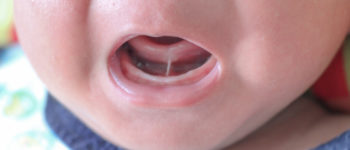
What is “tongue-tie”?
Tongue-tie is a fairly common condition that runs in families. It occurs when a thin web of skin under the tongue “ties” the tip of the tongue to the floor of the mouth.
Signs of tongue-tie in the infant include:
When the tongue looks heart-shaped or notched when stuck out
Difficulty sticking the tongue out past the lower teeth or up to the upper teeth
Difficulty moving the tongue from side to side of the mouth
How a tongue-tie may affect breastfeeding/chestfeeding:
Tongue-tie is a problem for somebreastfeeding/chest feeding people and babies.
This is because your baby uses the tongue to get milk from the breast/chest.
The tongue-tie prevents the baby’s tongue from extending far enough to get a proper latch. This is what can cause a person to feel pain during breastfeeding/chestfeeding.
Your baby may have trouble getting enough milk out of the breast/chest.
Mothers often complain about very sore nipples and the baby may be hungry and fussy.
How to treat tongue-tie?
Sometimes a tongue-tie will stretch over time, allowing the tongue to move better as the baby grows.
If you have early and ongoing breastfeeding/chestfeeding problems, a simple procedure called a frenotomy may free the tongue and help your baby to feed. This procedure can be done on an out-patient basis with minimal if any bleeding or pain.
Your health care provider can assess the tongue-tie and provide information on where to get frenotomy.
At about 21 weeks of your pregnancy, your body starts making milk which you may not notice until after delivery. Breasts/chests of all shapes and sizes can make milk. Your breasts/chest are designed to make as much milk as your baby (or babies – twins, triplets) needs. The more often your baby feeds, the more milk you make (also known as supply and demand). Your breastmilk/chestmilk changes daily to meet the nutritional needs of your growing baby.
Your breastmilk/chestmilk has three different stages:
Colostrum:
Your first breastmilk/chestmilk is called colostrum. Your body starts to make colostrum when you are around four months pregnant, and it will last up to four days after you give birth. It is either yellowish or creamy in color. Colostrum is high in protein, fats, vitamins and antibodies. Consider colostrum your baby’s first immunization. This is the first milk your baby will get when you breastfeed/chestfeed.
At this point many parents worry that they are not producing milk, and they are concerned that their baby is not getting enough.
Colostrum provides all the nutrients your baby needs for the first few days of life. Your baby’s tummy is the size of a dime at birth so they will only need a little bit at a time. This is why babies need to feed so often.
Transitional Milk
Three to four days after you give birth, your breasts/chest will become fuller and heavier. Birthing parents often refer to this as their milk “coming in.” Transitional milk looks like milk mixed with orange juice. It has less antibodies and protein than colostrum but has more sugar, fats and calories, which your baby needs for growth.
Mature milk
This will come in about 10 days after you give birth. It looks like watery skim milk because it is 90 per cent water. This will keep your baby hydrated. The other 10 per cent is made up of the carbohydrates, proteins and fats your baby needs for growth and energy.
Our bodies are amazing! They make the right type of milk our babies need as they grow and develop.
Check out this video!
Note: Other videos may be recommended by the host channel (e.g. YouTube, Vimeo). These suggestions may be based on your personal search history and other factors. The Manitoba Government does not control these suggestions and is not responsible for and may not endorse the content.
Respiratory syncytial virus (RSV) is usually mild and doesn’t need any treatment. Most children do not need to see a doctor. If you are not sure if your child needs to see a doctor, call Health Links – Info Santé (204-788-8200 or toll-free 1-888-315-9257).
RSV is the most common virus that can infect the lungs and breathing tubes. RSV infection is most serious in young babies. Almost all children get the virus at least once before they are two years old. Older children and adults also get RSV at least every few years, but do not usually get very sick from it.
How is it spread?
RSV is very contagious. The virus is most common between late fall and early spring. RSV spreads the same way as a common cold:
By touching something that has the virus on it, then touching your mouth, nose or eyes with unwashed hands.
By being close (less than two metres apart) to someone with the infection who is coughing or sneezing. Droplets from the infected person can reach another person’s nose or mouth.
What are the symptoms of RSV?
Children with RSV have the same symptoms as a common cold, which may include:
Some children (most often very young babies) may have bronchiolitis – an infection of the tiny airways that lead to the lungs that causes wheezing and difficulty breathing.
How is RSV treated?
RSV is usually mild and doesn’t need any treatment. Most children get better within a week or two. Sometimes children need to be hospitalized so that they can be watched closely and given fluids or oxygen if needed. Because RSV is a virus, antibiotics will not help a child get better faster (antibiotics kill bacteria, not viruses).
How can I protect my children from RSV?
Keep babies under six months old away from people with colds, if possible.
Breastfeeding /Chestfeeding. Breastmilk/chestmilk contains antibodies and other immune factors that help prevent and fight off illness.
Don’t smoke. Make sure that your children are not around cigarette smoke, especially in the car or in your home.
Make sure your child receives all recommended immunizations. Vaccines won’t prevent your child from getting RSV or other viruses that cause colds, but they will protect your child from some of the complications a cold can cause.
Infants and young children who are at risk of severe RSV infection, such as those with heart or lung disease or those who are born very early, are eligible to receive an antibody medication to protect against RSV through the Manitoba RSV Prophylaxis Program.
What can I do if my child is sick?
Keep your child at home and as comfortable as possible. Offer plenty of fluids.
Give acetaminophen or ibuprofen for fever. Ibuprofen should only be given if your child is drinking reasonably well. Do not give ibuprofen to babies under six months old without first talking to your doctor. Speak to a health-care provider if you are unsure of what to take or are unable to use these medications.
If your baby is having trouble drinking, try to clear nasal congestion gently with a bulb syringe or with saline (salt water) nose drops.
If you are using cough and cold medicines for children older than six years, read instructions carefully and give only the recommended dose.
When should I seek immediate medical care?
Take your baby to an emergency department if your child:
has trouble breathing or has lips that look blue,
is younger than three months old and has a fever
is no longer able to suck or drink and is showing signs of dehydration (dry mouth, less urine output)
See a doctor if your child:
has had a fever for more than 72 hours
is not eating or is vomiting
is not having wet diapers
is coughing so bad that they are choking or vomiting
If you have questions about RSV, speak with your primary care provider – your doctor, registered nurse, public health nurse, nursing station or health centre , or call Health Links – Info Santé at 204-788-8200 or toll-free 1-888-315-9257.
Knives, scissors and other sharp utensils are out of reach or in a drawer with a child safety latch
Anchor the stove to the floor with an anti-tip bracket
The stove’s back burners are used when cooking
Hot food and drinks are kept away from edges of tables and counters
Appliance cords are out of reach
Plastic bags and food items small enough to cause choking are kept away from babies and toddlers
A fire extinguisher is conveniently located and you know how to use it
Bathroom
Medicines and cleaners are stored in a locked medicine cabinet or well out of a child’s reach
Use protective plug covers on electrical outlets
Hair dryers, curling irons and other electrical appliances are unplugged and out of a child’s reach
Non-slip mat or decals are used in the bathtub
An infant bath ring or bath seat is not used
The hot water is no hotter than 49 C (120 F)
Child’s Room
The crib is in good condition, made after 1986 and has been checked for recalls
Mattress fits snugly without gaps to prevent a small head from getting caught
No bumper pads, pillows, quilts, duvets or toys in the crib
Beds and cribs are placed away from the window and any electrical cords
Dresser and bookcases are anchored securely
Diaper changing products (e.g., pins, powders, wipes, oil, etc.) are stored away from babies and small children
Window coverings are cordless or secured using a tie-down device up high on the wall. Securely attach tension devices supplied with corded window coverings
The toy chest has ventilation holes and a lid that can be opened from the inside
TV sets, bookcases and furniture are anchored securely to the wall
Sharp corners and edges on tables have been covered with soft cushioning
Fireplaces and wood stoves have fixed safety guards around them
Matches and fire starters are out of reach of children
Windows and sliding doors have safety locks
Poisonous houseplants have been removed
Blind and drapery cords are cut or tied up high
Furniture, such as side tables and couches, is away from windows
Non-slip mats are used under rugs
Around the Home
Smoke alarms are installed outside all sleeping areas and on each level of your home. Test them monthly by pressing and holding the test button. Change batteries every six months.
Safety Tip
Having a smoke alarm in each bedroom is the safest choice.
Carbon monoxide detectors are installed outside each sleeping area and on each level of your home
Electrical cords are secured out of reach
Outlet covers are used on electrical outlet
Window coverings are cordless or secured using a tie-down device up high on the wall. Securely attach tension devices supplied with corded window coverings.
Damaged window screens should be replaced; every window should have a screen
Hazardous products like medications, cleaners, laundry pods, chemicals, alcohol, cigarettes and marijuana products are kept locked up and out of child’s reach
Child’s surroundings have been cleared of small objects that could cause choking
A wall-mounted safety gate is installed at the top of stairs and a pressure-mounted gate is used at the bottom of stairs
Doorknob covers are placed on doorknobs to stop a child from opening doors to unsafe areas
Hot tap water temperature is no hotter than 49 C (120 F)
Wading pools and buckets are emptied when not in use
Swimming pools are surrounded by four-sided fencing with a self-closing and locking safety gate. Check your local bylaws for fencing and gate requirements.
Emergency phone numbers, including Manitoba Poison Centre (1-855-776-4766), are kept in or near your phone.
Fans should always have a front cover on them to avoid injuries
You are leaving the Parenting in Manitoba website. The Government of Manitoba is not responsible for the content or security of third-party websites. Go BackContinue
Vous quittez à présent le site Web Être parent au Manitoba. Le gouvernement du Manitoba n’est pas responsable du contenu ni de la sécurité des sites Web tiers. RetourneContinuer